Virtualization vs Containerization
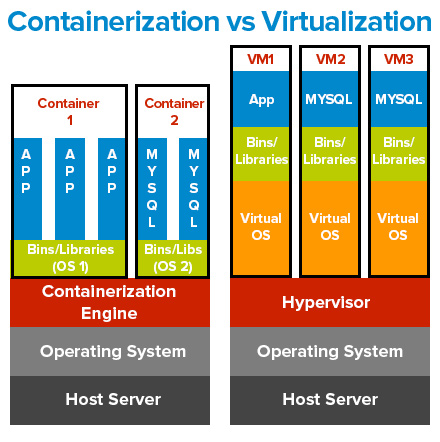
Virtualization enables you to run multiple operating systems on the hardware of a single physical server, while containerization enables you to deploy multiple applications using the same operating system on a single virtual machine or server. Virtual machines are great for supporting applications that require an operating system’s full functionality when you want to deploy multiple applications on a server, or when you have a wide variety of operating systems to manage. Containers are a better choice when your biggest priority is to minimize the number of servers you’re using for multiple applications. Your use case matters too. Containers are an excellent choice for tasks with a much shorter lifecycle. With their fast set up time, they are suitable for tasks that may only take a few hours. Virtual machines have a longer lifecycle than containers, and are best used for longer periods of time. The way forward for your organization will depend on everything from the size of your operations and workflows to your IT culture and skill sets. And, containerization and virtualization technologies are coming together in some interesting new ways that could influence your decision making.
Containerization is a method of hosting applications, databases and processes that is much more efficient than the traditional virtualization method. It utilizes resources in a clustered or large environment much better than virtualization because it has less layers to load into memory and run. Containers share a single operating system to publish all applications, databases, processes etc… but they’re also isolated so one container cannot affect the other if there is a health issue.